
Women Rising, Rooted in Kentucky: Norah Chapman, PhD, HSP & Amy Young, PsyD, MSEd, HSP, PMH-C Cofounders of ROWEN Specialty Clinic for Women
Women Rising, Rooted in Kentucky: The stories of women in psychology who chose to stay, build, and lead in Kentucky
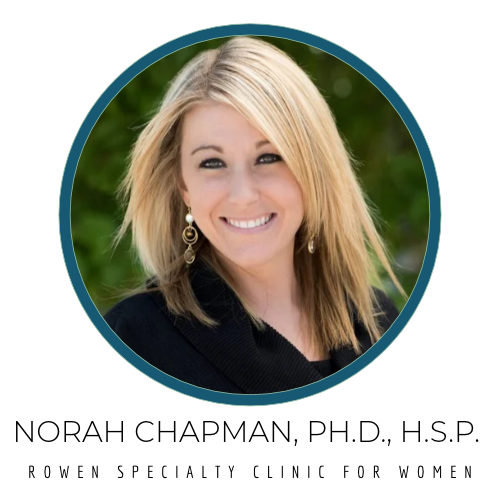
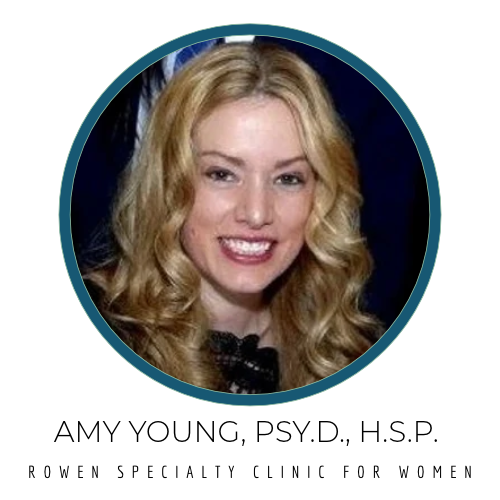
Tell us about yourselves and what you do professionally?
We founded Rowen Specialty Clinic for Women shortly after COVID with the goal of creating a specialty clinic where women and families in Kentucky could receive high-quality, evidence-based perinatal mental health care. We wanted a place where women could find support for experiences such as pregnancy loss, miscarriage, infertility, IVF, postpartum anxiety, postpartum OCD, postpartum psychosis, and other challenges that are often less familiar than postpartum depression. Over time, our work has also expanded to include perimenopause and relationship challenges related to motherhood.
One part of our clinic provides direct therapy services. We use evidence-based assessment measures and have even developed a new screening tool to better capture the experiences women are struggling with during the perinatal period. The other half of our clinic focuses on training the next generation of psychologists. Each year, doctoral students who are interested in specializing in perinatal psychology complete a training rotation with us, receiving supervision and developing specialized clinical skills working with this population. Education is also a large part of what we do. We regularly provide workshops, lunch-and-learn presentations, and trainings for agencies and private practices, both in person and through telehealth. We enjoy collaborating with other providers and agencies and are always happy to explore new ways to expand training and education around perinatal mental health.
What legacy or impact do you hope to leave for future generations of psychologists in Kentucky?
We hope to see specialized training in women's mental health and perinatal psychology become a routine part of graduate education rather than a rare opportunity. Our goal is for more universities to offer electives, practicum placements, and training experiences focused on perinatal mental health, so students who are interested in this work have meaningful opportunities to develop those skills. Just as graduate programs routinely provide training in areas such as trauma or substance use, we hope perinatal mental health becomes a well-established area of education and clinical training. We hope future psychologists enter the profession with a stronger understanding of perinatal mental health and greater confidence serving women and families throughout Kentucky.
What has kept you connected to Kentucky throughout your career?
We are both deeply committed to improving access to mental health care in Kentucky, especially for women and families in rural communities. One of the things we value most is being able to use telehealth to reach people who might not otherwise have access to specialized perinatal mental health services. We have also tried to make our clinic as accessible as possible. ROWEN Specialty Clinic for Women offers a sliding-scale fee, allowing us to work with individuals who may not have insurance or who need lower-cost therapy options. Being able to provide flexible, affordable care has been an important part of our mission and has allowed us to connect with more women and families across Kentucky.
Do you have any career advice for new psychologists or psychology trainees?
Follow your passions. As you're thinking about your career, it's easy to focus on things like salary or other practical considerations, but we encourage new psychologists to lean into the populations, clinical issues, and areas of advocacy that genuinely excite them. When your work aligns with what you care about most, it helps keep you energized and can protect against burnout. We also encourage people to stay open to opportunities. Some of the best ideas come from conversations with other professionals. We try to approach new partnerships, collaborations, and ideas with curiosity—asking, "Let's talk about it. Let's see if we can create something together." Not every opportunity will work out, but we've found that being open and flexible has led to partnerships, services, and referral relationships we never would have anticipated. Some of our most meaningful partnerships have come from conversations we never expected. We try to stay open to new ideas and see where they lead.
What does Women Rising, Rooted in Kentucky mean to Rowen Specialy Clinic?
To us, it means recognizing the strength and resilience of women. Much of our work involves helping women reframe the way they think about themselves. Many come to us feeling shame, questioning whether they are good enough, or believing they are somehow falling short in motherhood or other areas of their lives.
We want women to recognize how much they are managing every day and to appreciate the incredible strength it takes to balance so many different roles and responsibilities. Rather than focusing on what they believe they are not doing well enough, we hope they see the resilience they already possess.
Our goal is to help women leave with a greater sense of confidence and pride in themselves—not because they have become someone different, but because they have recognized the strength that was there all along.
Caroline Hartz, LPA
Clinical Psychology Doctoral Candidate, Western Kentucky University