
Reflections from an Early Career Psychologist
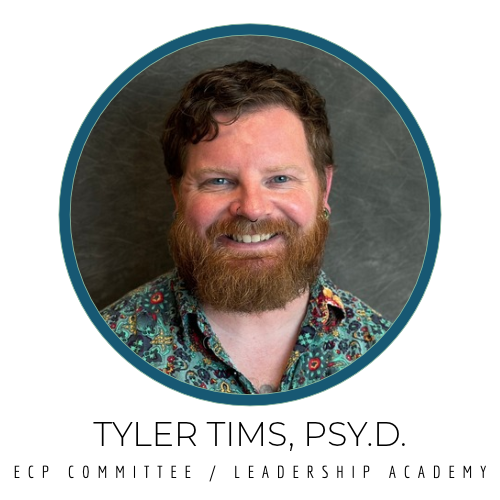
Let me start by introducing myself. I am Dr. Tyler Tims and I am a Staff Psychologist at Eastern Kentucky University’s Counseling Center (EKUCC). I am an Early Career Psychologist, and I graduated with my Doctor of Psychology from Austin Peay State University (APSU) in Clarksville, Tennessee in August 2025. I completed my pre-doctoral internship at EKUCC and was fortunate to move into a post-doc/staff psychologist position at the same center following the conclusion of my internship program. Additionally, I am a disabled US Army combat veteran with 3 tours to Iraq and Afghanistan completed during my tenure in the military.
As you may expect, the transition from the military into academia was quite an adjustment. I quickly learned that the key to my personal transition was the establishment of new community and a renewed sense of purpose. I was fortunate
to find a strong academic community at APSU, and I discovered a love for the field of psychology. I quickly made connections with my peers in my programs as well as developing mentorship relationships with my professors. These relationships helped me feel connected to my academic community and showed me what being a professional in the field can look like.
Jump to my time in Kentucky. Like most of you, I had anticipatory anxiety moving into the APPIC match process. I interviewed at and ranked several high-quality internship programs. Alas, I had to leave my professional fate to the magic of APPIC’s match algorithm. Match day revealed that I would be spending my next year at EKUCC and I was elated. The internship program strongly matched my professional interests. What I didn’t know at the time is that the culture of the counseling center would also allow me to develop new community and connections.
During my internship year, I made it a point to connect with the state professional organization. My first connection with the larger professional community was to attend the 2025 Legislative Day at the state capital in Frankfort. An event I have now attended twice. Speaking with legislatures was not a new experience for me. I went to the Tennessee state capital a couple of times during my undergrad experience on behalf of United Campus Workers. However, this was my first time attending as a future psychologist. Not only did I have a chance to speak with state lawmakers about matters important to our field, I was also able to start building connections with our organization. I quickly learned that the field of psychology is surprisingly small as I discovered several professional overlaps. The overlapping connections made it easy to start building a professional community of my own.
I was encouraged by several KPA members to join the revamped KPA Leadership Academy that ran throughout 2026. I was paired with Dr. Beth Simon as my professional mentor and this pairing was invaluable to my professional development. Beth and I frequently discussed the intricacies of working in a college counseling setting. We also discussed how leadership in these settings may differ from other settings such as community care or private practice. The Leadership Academy also allowed me to connect with the KPA executive team throughout the year.
These connections have greatly paid off. I have created a large network of professionals in the field that I can rely on for support as I continue to establish myself as an Early Career Psychologist. I was shocked at how many familiar faces I encountered at the KPA Annual Convention in Louisville this year. I truly felt like a member of the KPA team and had a strong sense of belonging.
My takeaway from these experiences is about how important it is to take the time to connect with our professional community. I strongly encourage other ECPs to get involved with KPA, consider joining the 2028 Leadership Academy, and attending the state conferences when possible. Build relationships with others in the field. Find common interests and shared passion. These connections will be invaluable to your professional development.